 We Are Hiring! Plumbers, CDL Drivers & Laborers


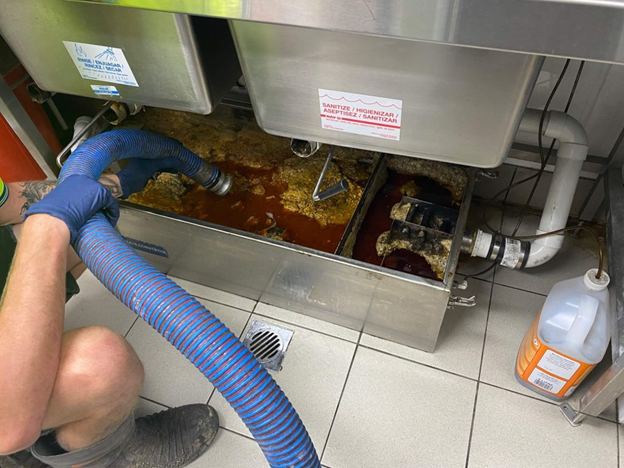
FOG buildup raises plumbing bills because fats, oils, and grease rarely create one obvious problem at first. They collect quietly inside traps, interceptors, and drain lines, slowing the system a little at a time. That slow buildup can turn into recurring clogs, bad odors, backups, staff interruptions, and emergency plumbing calls.
The expensive part is often the delay. If your kitchen waits until drains are slow or a trap is overflowing, you’re already reacting to a problem that has been building for weeks. A better approach treats grease trap service as planned protection for the kitchen, not cleanup after the plumbing complains.
What is FOG buildup in commercial plumbing?
FOG stands for fats, oils, and grease. In a commercial kitchen, FOG can come from cooking oil, meat grease, butter, sauces, dairy, food scraps, and rinse water that carries residue into the plumbing system.
A grease trap or interceptor is meant to capture that material before it moves deeper into the lines. The trap still needs regular pumping and cleaning. If it gets too full or goes too long between service visits, grease can escape the trap and start creating problems farther down the system.
Why does grease buildup raise plumbing bills over time?
Grease buildup raises costs because it changes plumbing from predictable maintenance into repeat repairs. A slow drain becomes a service call. A service call becomes a backup. A backup becomes cleanup, downtime, and frustration for your staff.
That pattern is easy to miss because the first signs can feel minor. One floor drain smells bad. One sink drains slowly. One line needs attention again. The real issue may be that your grease trap schedule no longer matches the way your kitchen operates.
What are the signs your grease trap needs pumping?
Your grease trap may need pumping if drains slow down, odors spread near sinks or floor drains, backups keep returning, or grease appears where it should not be. These signs usually mean the trap is not separating grease effectively anymore.
Don’t wait for an overflow to take action. If the same drain problems keep coming back, the trap, interceptor, or service interval needs a closer look.
How often should a commercial kitchen pump its grease trap?
A commercial kitchen should pump its grease trap often enough to keep FOG from filling the trap and moving into the plumbing lines. The right schedule depends on kitchen volume, menu type, trap size, and how much grease the operation produces.
A light-use kitchen and a high-grease restaurant should not assume they need the same schedule. Fried foods, heavy grill use, pizza, BBQ, and busy service periods can all increase grease load. Downing Septic helps commercial kitchens with grease trap pumping, cleaning, inspection, repair, and installation, so the schedule can match the actual system instead of guesswork.
Why is FOG buildup a scheduling problem before it is a plumbing problem?
FOG problems often become expensive because service happens too late. The trap may be working, but the cleaning interval is too long for the kitchen’s volume. That gap allows buildup to creep into places it should not be.
This is where many operators start searching for “grease trap pumping near me” after the problem has already interrupted the kitchen. A better move is to track service dates, odors, slow drains, and backups so the schedule can be adjusted before the next urgent call.
What is the difference between grease trap cleaning and pumping?
Grease trap pumping removes the accumulated contents from the trap or interceptor. Cleaning can also address residue, buildup, and the condition of the unit. Inspection matters because recurring problems may point to damage, poor flow, or a system that needs repair.
Downing Septic provides grease trap and interceptor services for commercial and industrial customers, including pumping, cleaning, inspection, repair, and installation. That matters when the issue is more than a full trap.
Why do grease trap odors matter?
Grease trap odors matter because they can signal buildup, trapped waste, slow flow, or missed maintenance. They also affect the way staff and customers experience the space.
An odor problem should not be treated as just a comfort issue. In a restaurant, cafeteria, or food-service facility, smell can be an early warning that the system needs attention before a backup or overflow creates a bigger disruption.
What should you track between grease trap services?
Track simple details that show whether your grease system is keeping up:
- Service dates
- Slow drain complaints
- Odors near sinks or floor drains
- Backups or recurring clogs
- Menu or volume changes
- Grease-heavy production days
- Any repairs or inspections
These notes make the next service call more useful. Instead of saying, “It keeps happening,” you can show a pattern. That helps us understand whether the issue is frequency, equipment condition, line buildup, or kitchen practices.
When should you call for emergency grease trap service?
Call for urgent help when there is an active backup, overflow, severe odor, failed equipment, or a plumbing issue that disrupts kitchen operation. Waiting during an active problem can increase cleanup, downtime, and stress.
Downing Septic offers year-round 24-hour service for urgent needs. That does not mean every grease trap problem should become an emergency. Regular pumping is still the better financial decision whenever possible.
What should you ask before hiring grease trap cleaners?
Before hiring a provider, ask whether they handle pumping, cleaning, inspection, repair, emergency service, and commercial systems. Also ask how they help determine the right service schedule.
That matters because many people search “grease trap cleaners near me” after a clog or odor appears. Price matters, but the better question is whether the company can help stop the same problem from returning.
Keep grease from becoming the next plumbing bill
FOG problems usually become expensive before they become obvious. The smarter move is to treat grease trap pumping as planned protection for your kitchen, your staff, and your plumbing budget.
If you’re searching for “grease trap cleaners near me” because slow drains, odors, or recurring backups are becoming a pattern, reach out to Downing Septic. Keep grease from turning into a bigger plumbing bill with our grease trap pumping service.